AI ingredient checker to improve vegetarian grocery shopping
TAGS
TAGS
AI Product design
AI Product design
ux research
ux research

DURATION
DURATION
6 Months
6 Months
ROLE
ROLE
First Author and Principal Designer
First Author and Principal Designer
CONTRIBUTION
CONTRIBUTION
UX Research: Information Architecture, Video Ethnography, Contextual Inquiry, In-depth interview, Thematic Coding
UX Research: Information Architecture, Video Ethnography, Contextual Inquiry, In-depth interview, Thematic Coding
UI Design, Rapid Prototyping
Document Journal Paper
Prototyping and Web Deployment
End-to-End Design
UI Design, Rapid Prototyping
Document Journal Paper
Prototyping and Web Deployment
End-to-End Design
Overview
Overview
Consumers had to interpret complex ingredient lists on their own, often resulting in uncertainty and mistrust. Vday scans ingredient labels, detects animal-derived components, and clarifies edibility in seconds.
Consumers had to interpret complex ingredient lists on their own, often resulting in uncertainty and mistrust. Vday scans ingredient labels, detects animal-derived components, and clarifies edibility in seconds.
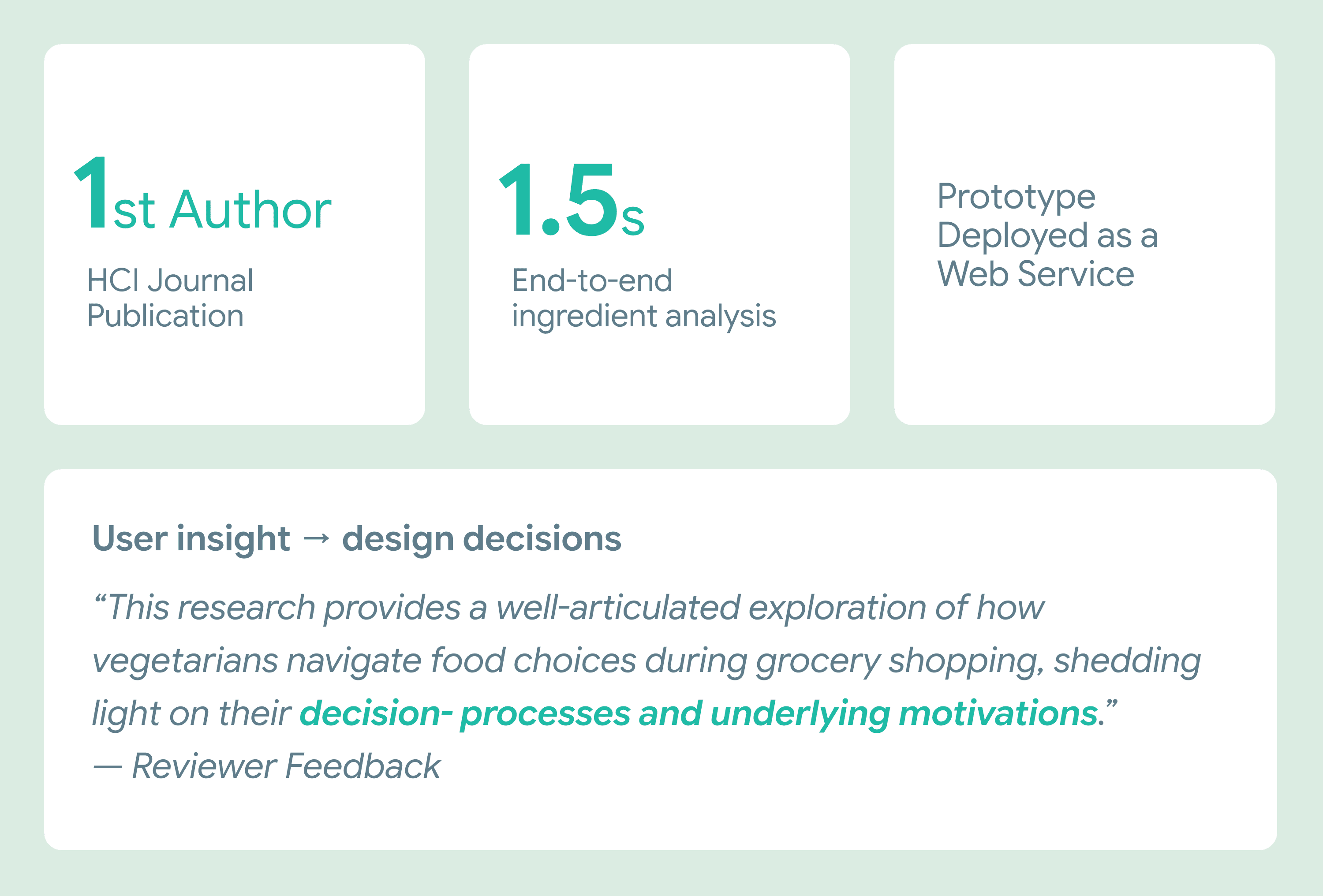
Impact
Impact
Impact
Research Process
Research Process
Research Process
Empathize + Define
Empathize + Define
Domain Research
Formulate Hypothesis
User Interview
Affinity Diagram
Define Pain Points & User Segmentation
Domain Research
Formulate Hypothesis
User Interview
Affinity Diagram
Define Pain Points & User Segmentation
Ideate + Prototyping
Ideate + Prototyping
Ideate & Narrow Solutions
Architecture, Wireframing & User Flows
GUI Design
Rapid Prototyping
Ideate & Narrow Solutions
Architecture, Wireframing & User Flows
GUI Design
Rapid Prototyping
Prototype Testing
Prototype Testing
Research Design & Pilot Test
Participant Recruitment
Video Ethnography Test
Contextual Interview
In-depth Interview
Thematic Coding
Identify Areas for Improvement
Propose Design Improvement
Research Design & Pilot Test
Participant Recruitment
Video Ethnography Test
Contextual Interview
In-depth Interview
Thematic Coding
Identify Areas for Improvement
Propose Design Improvement
Problem Situation
Problem Situation
Problem Situation
Read the every ingredient label on package.
Read the every ingredient label on package.
Do an internet search to find whether it’s vegetarian food.
Do an internet search to find whether it’s vegetarian food.
Only buy vegetarian products that I know already.
Only buy vegetarian products that I know already.
First interview result with 6 Vegetarians
First interview result with 6 Vegetarians
Solution
Solution
Solution
Ingredient Detection
Ingredient Detection
Archiving the food information
Archiving the food information
Prototype Minimum Viable Product (MVP)
Prototype Minimum Viable Product (MVP)
Prototype Minimum Viable Product (MVP)
I designed and implemented the full pipeline—from OCR to classification and data persistence—to support rapid hypothesis validation with real users.
I designed and implemented the full pipeline—from OCR to classification and data persistence—to support rapid hypothesis validation with real users.
How the MVP Works
How the MVP Works
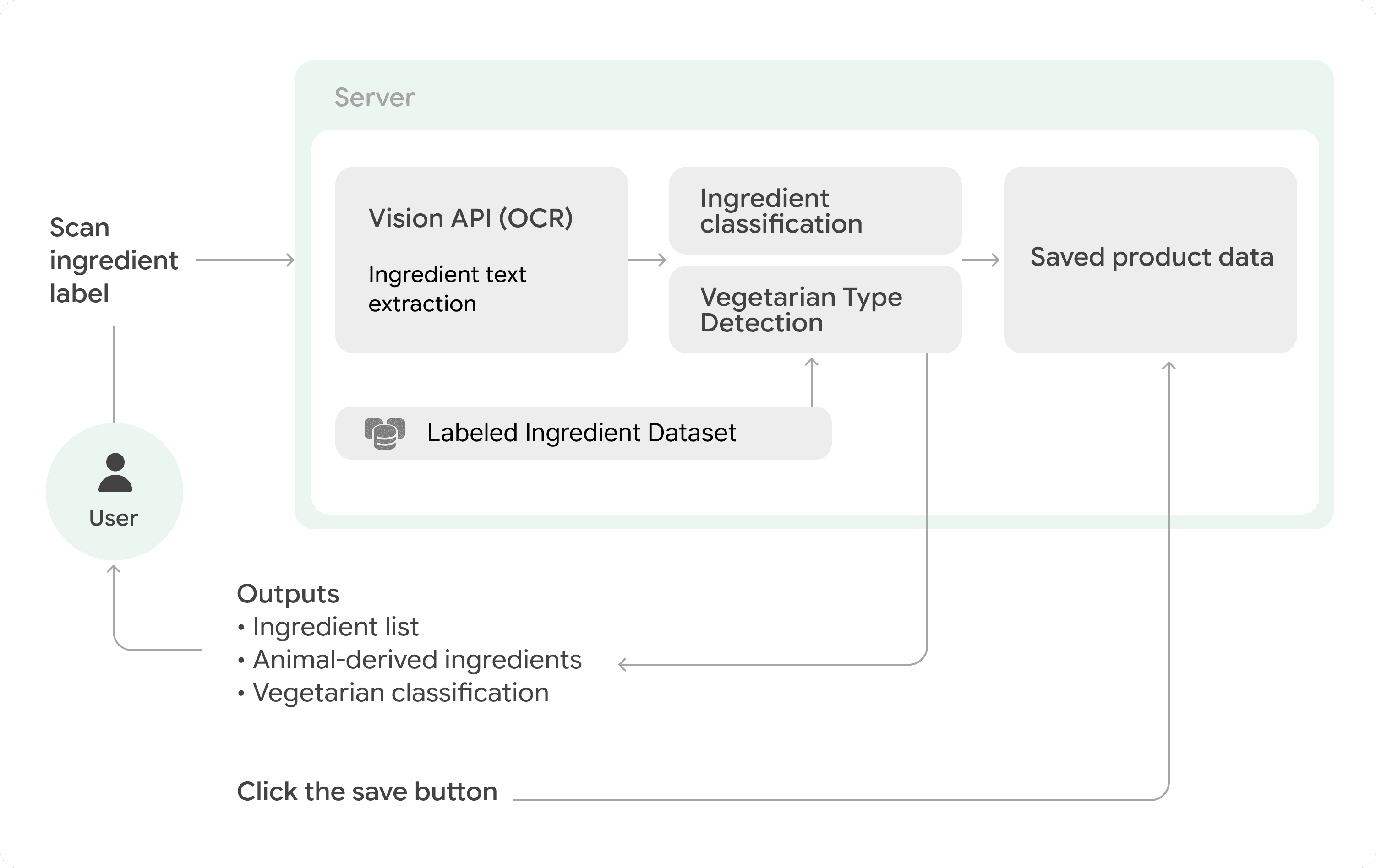
Key User Flow
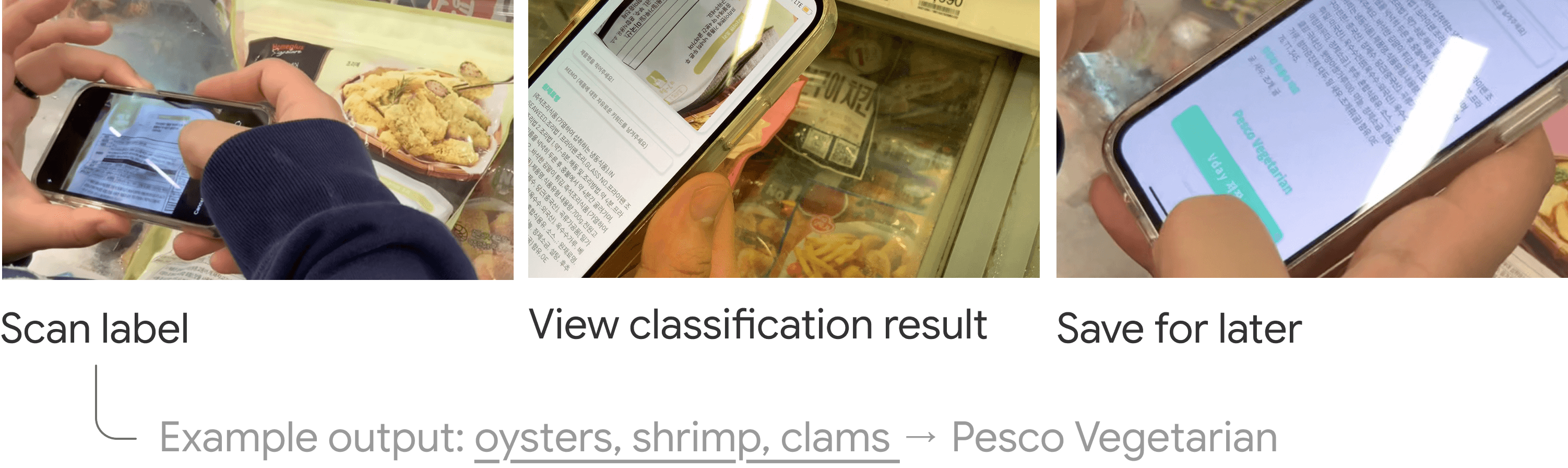
Key User Flow
Scan → Classify → Save
Scan → Classify → Save
MVP Validation
MVP Validation
MVP Validation
To validate whether the MVP meaningfully improves vegetarian grocery shopping, I conducted in-context user research with 9 vegetarian participants.
To validate whether the MVP meaningfully improves vegetarian grocery shopping, I conducted in-context user research with 9 vegetarian participants.
To validate whether the MVP meaningfully improves vegetarian grocery shopping, I conducted in-context user research with 9 vegetarian participants.
Research Scope
Research Scope
Research Scope
• 9 vegetarian users (Vegan, Pescatarian, Flexitarian)
• In-store grocery shopping, Seoul
• In-context usage + interviews (20–30 min)
• 9 vegetarian users (Vegan, Pescatarian, Flexitarian)
• In-store grocery shopping, Seoul
• In-context usage + interviews (20–30 min)
• 9 vegetarian users (Vegan, Pescatarian, Flexitarian)
• In-store grocery shopping, Seoul
• In-context usage + interviews (20–30 min)
What We Wanted to Validate
What We Wanted to Validate
What We Wanted to Validate
1. Does the MVP reduce the cognitive load of reading ingredient labels?
2. Is taking a photo during grocery shopping acceptable in real contexts?
3. Does the classification result support confident decision-making?
4. Would users want to reuse or revisit detected results over time?
1. Does the MVP reduce the cognitive load of reading ingredient labels?
2. Is taking a photo during grocery shopping acceptable in real contexts?
3. Does the classification result support confident decision-making?
4. Would users want to reuse or revisit detected results over time?
1. Does the MVP reduce the cognitive load of reading ingredient labels?
2. Is taking a photo during grocery shopping acceptable in real contexts?
3. Does the classification result support confident decision-making?
4. Would users want to reuse or revisit detected results over time?
Video Ethnography Test & Contextual Inquiry
Video Ethnography Test & Contextual Inquiry
Video Ethnography Test & Contextual Inquiry
Captured real-time shopping behavior and decision logic in-store using ethnography and contextual inquiry.
Captured real-time shopping behavior and decision logic in-store using ethnography and contextual inquiry.
Captured real-time shopping behavior and decision logic in-store using ethnography and contextual inquiry.
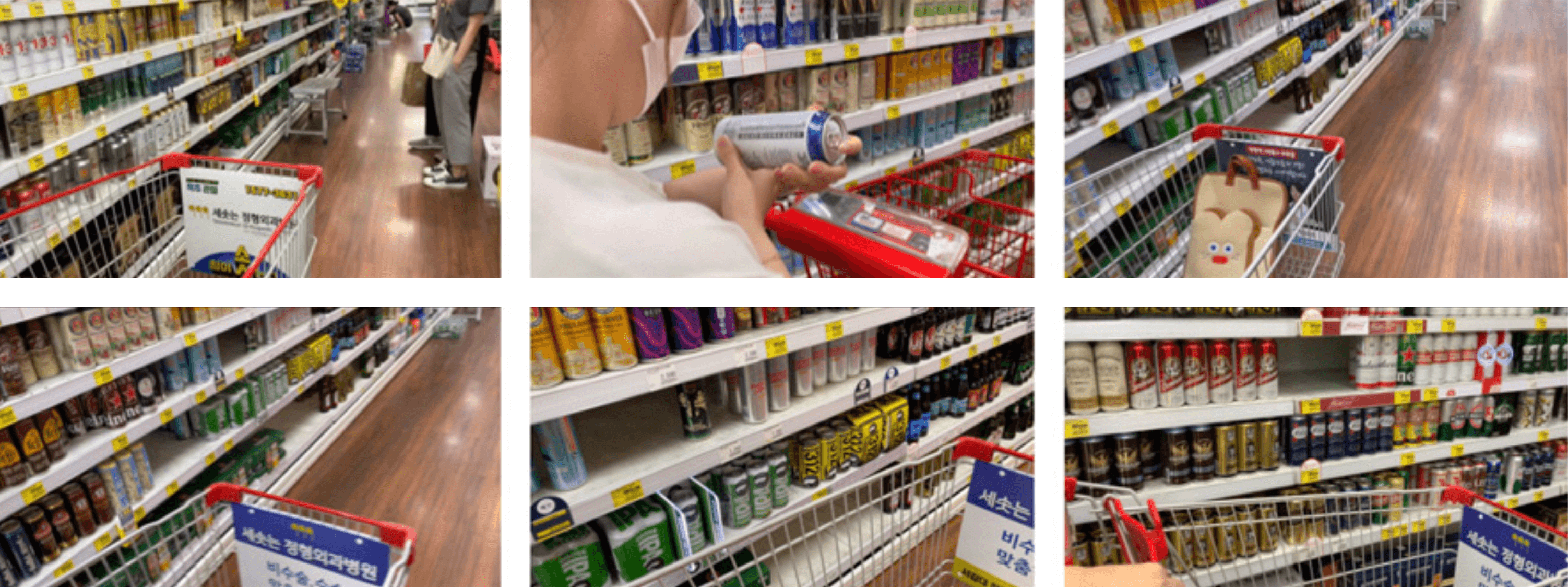
Context: In-store grocery shopping at a large supermarket chain in Seoul
Session: 20–30 min in-context usage + follow-up interviews
Context: In-store grocery shopping at a large supermarket chain in Seoul
Session: 20–30 min in-context usage + follow-up interviews
Research Design: Design Rationale
Research Design: Design Rationale
Research Design: Design Rationale
Measured time to first result (≤3s) on first use without instructions.
Captured behavior under constraint (time pressure, aisle context, unfamiliar ingredients).
Linked qualitative observation to quantifiable signals (time-to-decision, save intent).
Measured time to first result (≤3s) on first use without instructions.
Captured behavior under constraint (time pressure, aisle context, unfamiliar ingredients).
Linked qualitative observation to quantifiable signals (time-to-decision, save intent).
Measured time to first result (≤3s) on first use without instructions.
Captured behavior under constraint (time pressure, aisle context, unfamiliar ingredients).
Linked qualitative observation to quantifiable signals (time-to-decision, save intent).
Key Findings
Key Findings
Key Findings
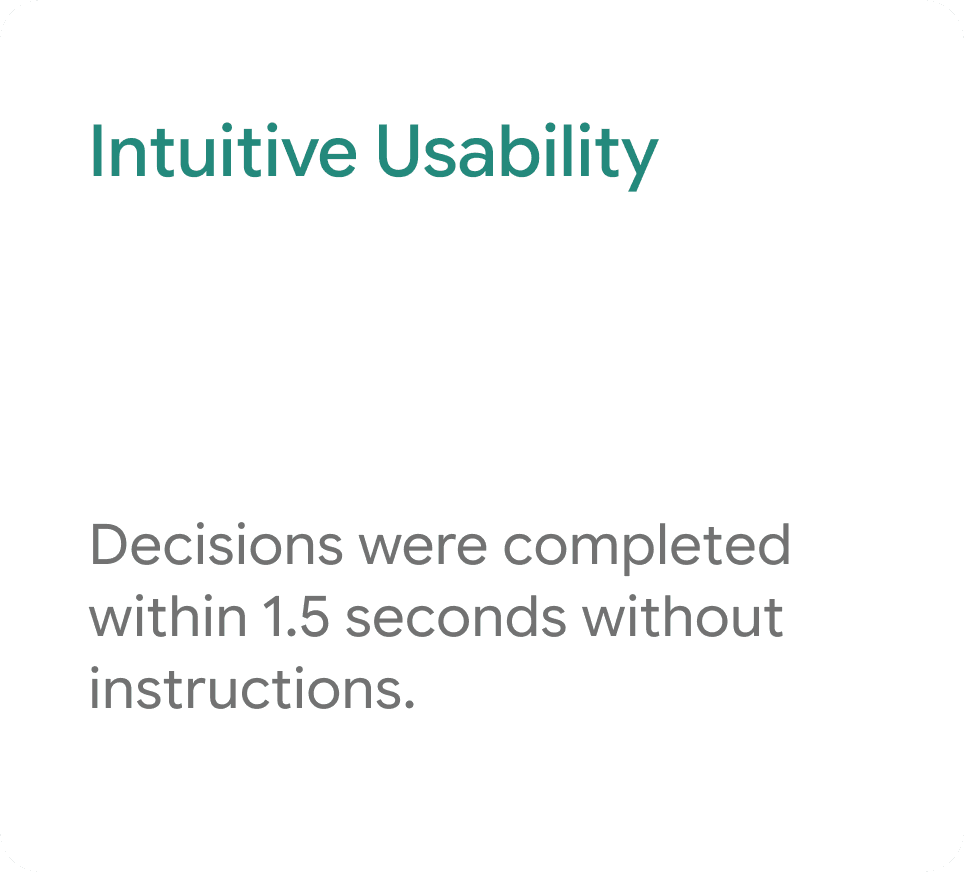
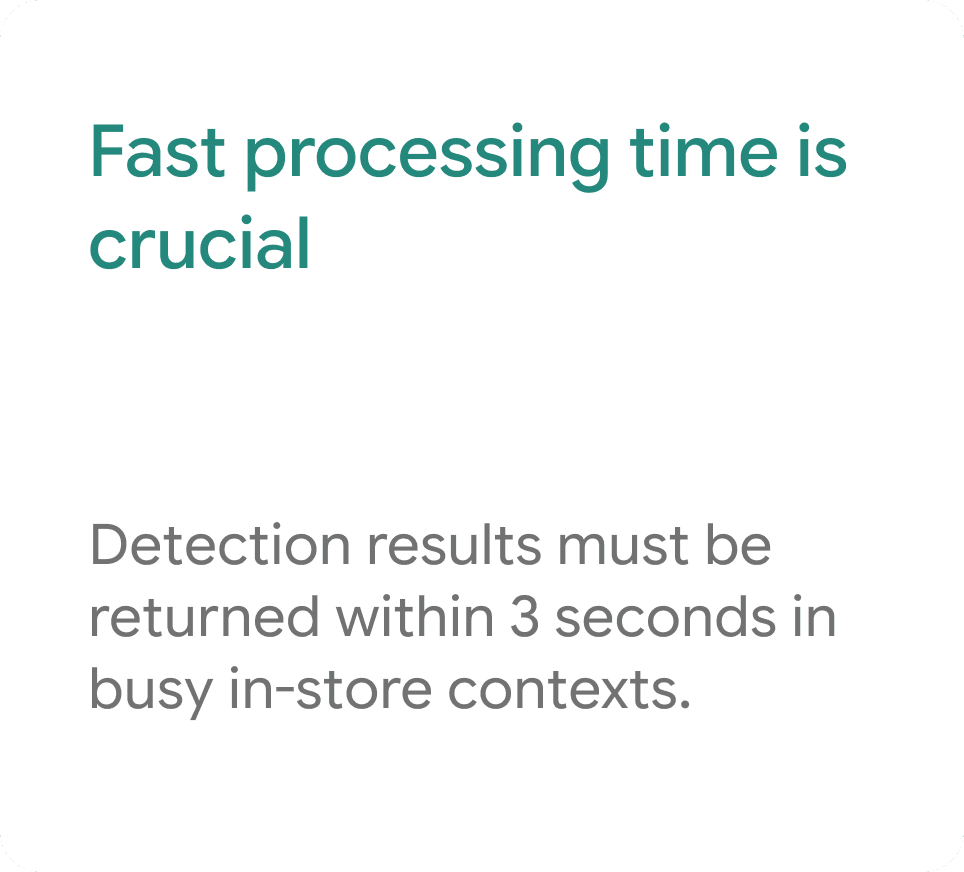
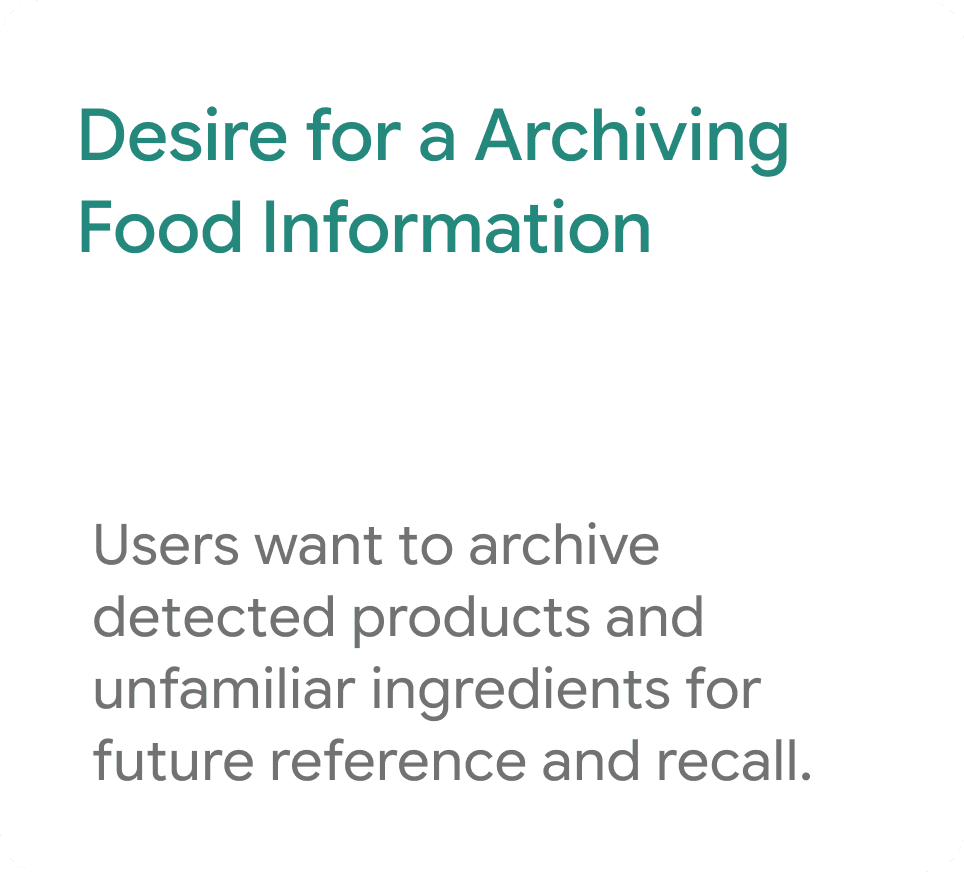
Behind the scenes: Structured usability testing framework.
Behind the scenes: Structured usability testing framework.
Behind the scenes: Structured usability testing framework.
Post-Use In-depth Interviews
Conducted 30-minute post-use interviews to understand user experience, motivation, and reuse intent.
Post-Use In-depth Interviews
Post-Use In-depth Interviews
Conducted 30-minute post-use interviews to understand user experience, motivation, and reuse intent.
Conducted 30-minute post-use interviews to understand user experience, motivation, and reuse intent.
Interview Insights
Interview data was analyzed and grouped into key themes.
Interview Insights
Interview Insights
Interview data was analyzed and grouped into key themes.
Interview data was analyzed and grouped into key themes.
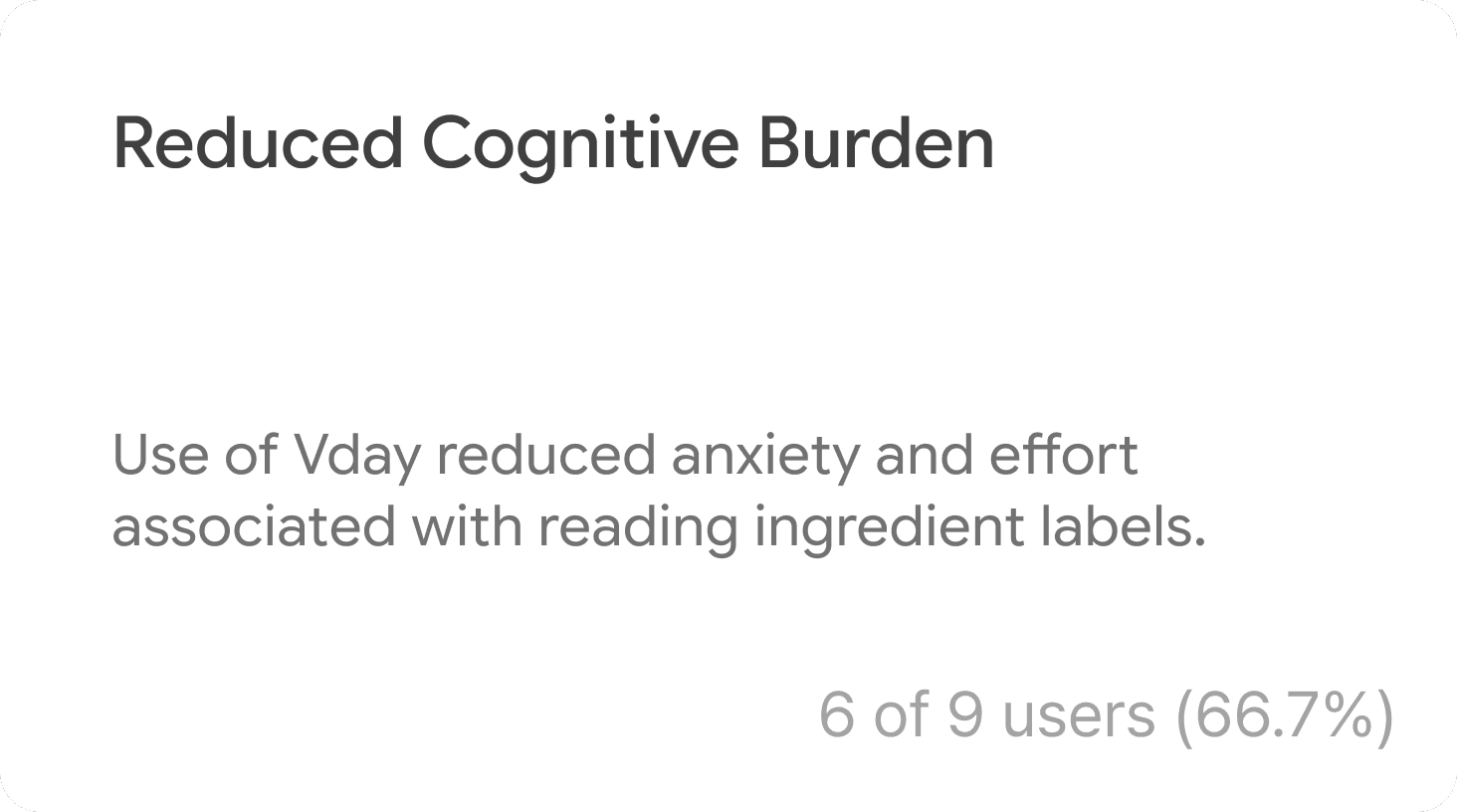
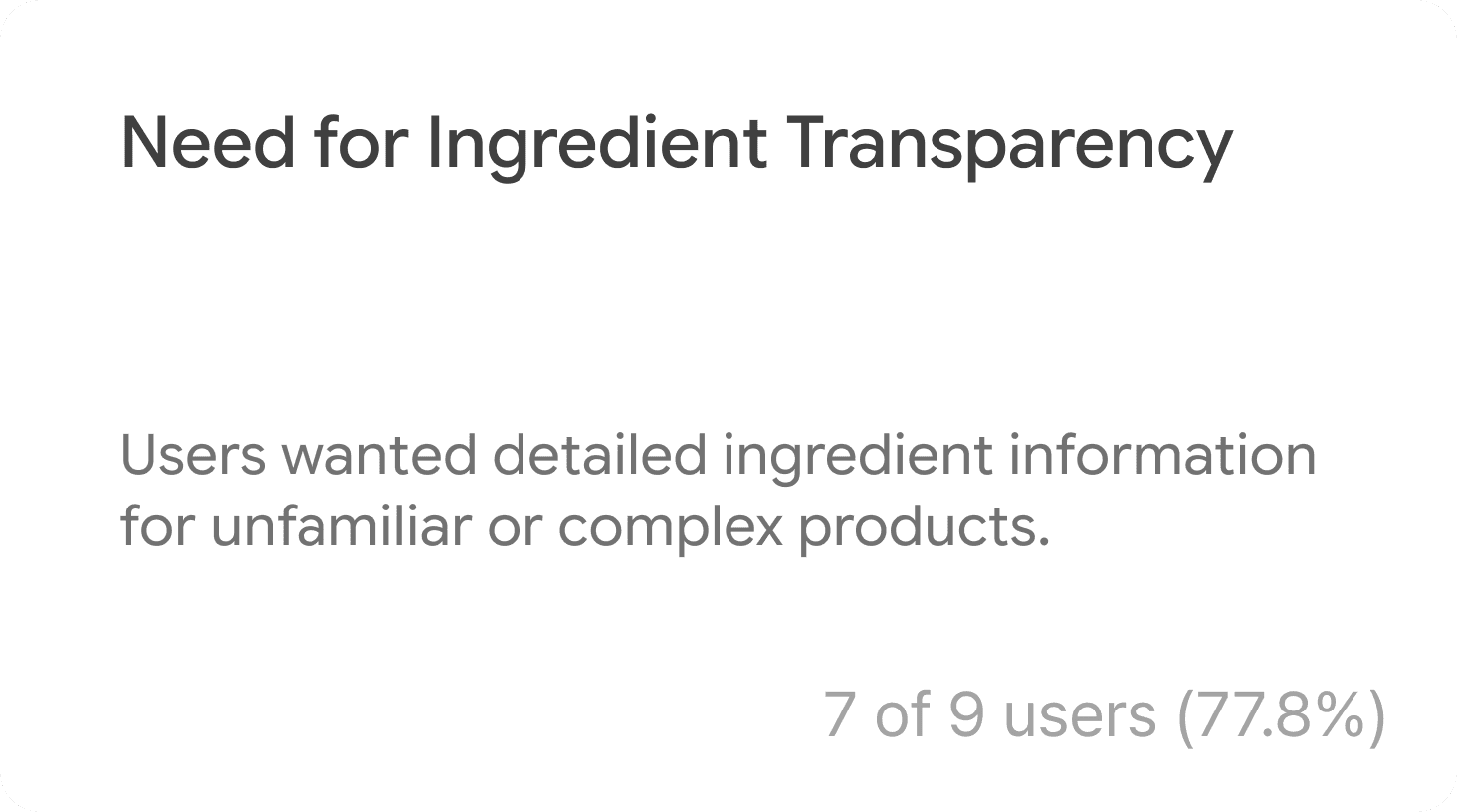
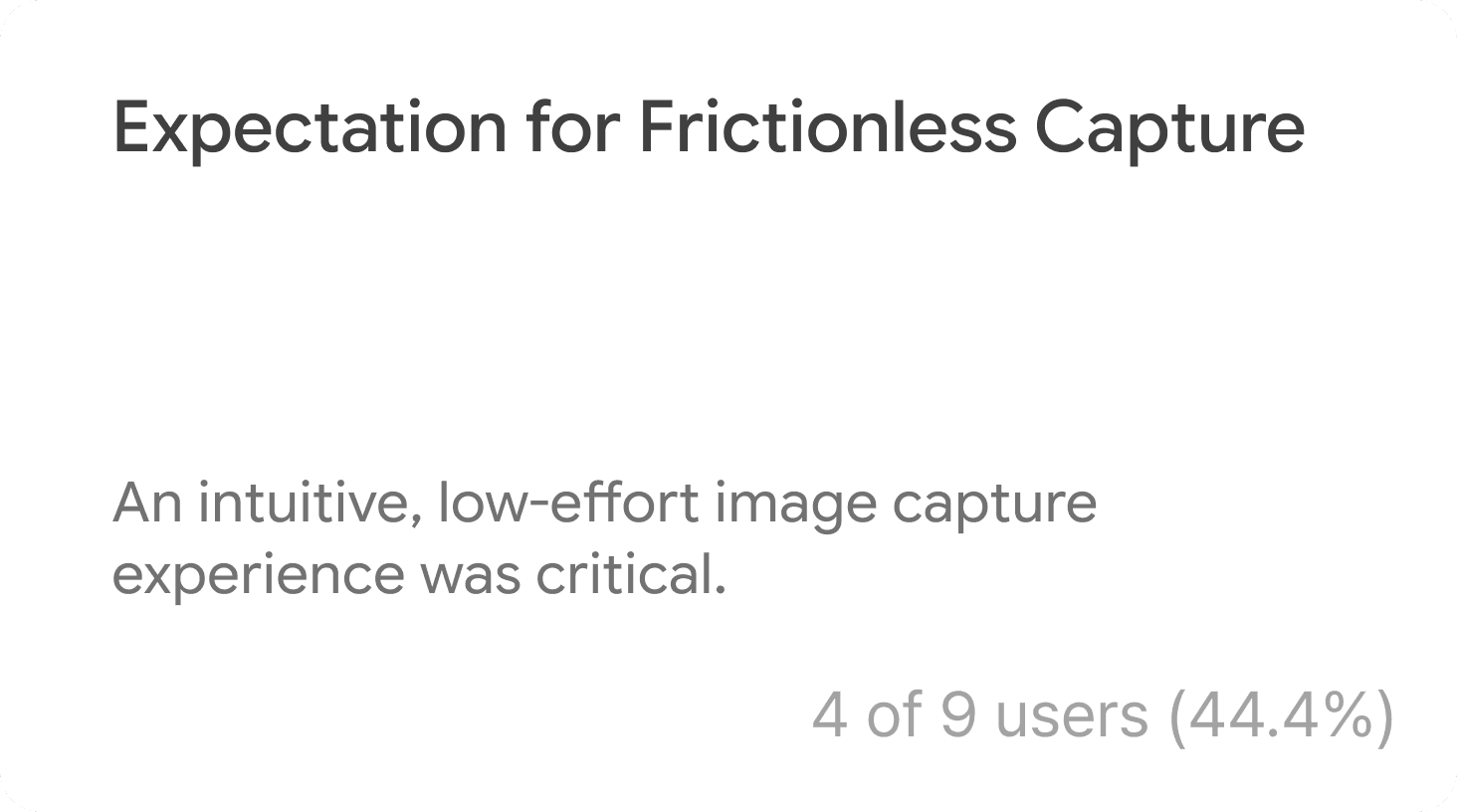
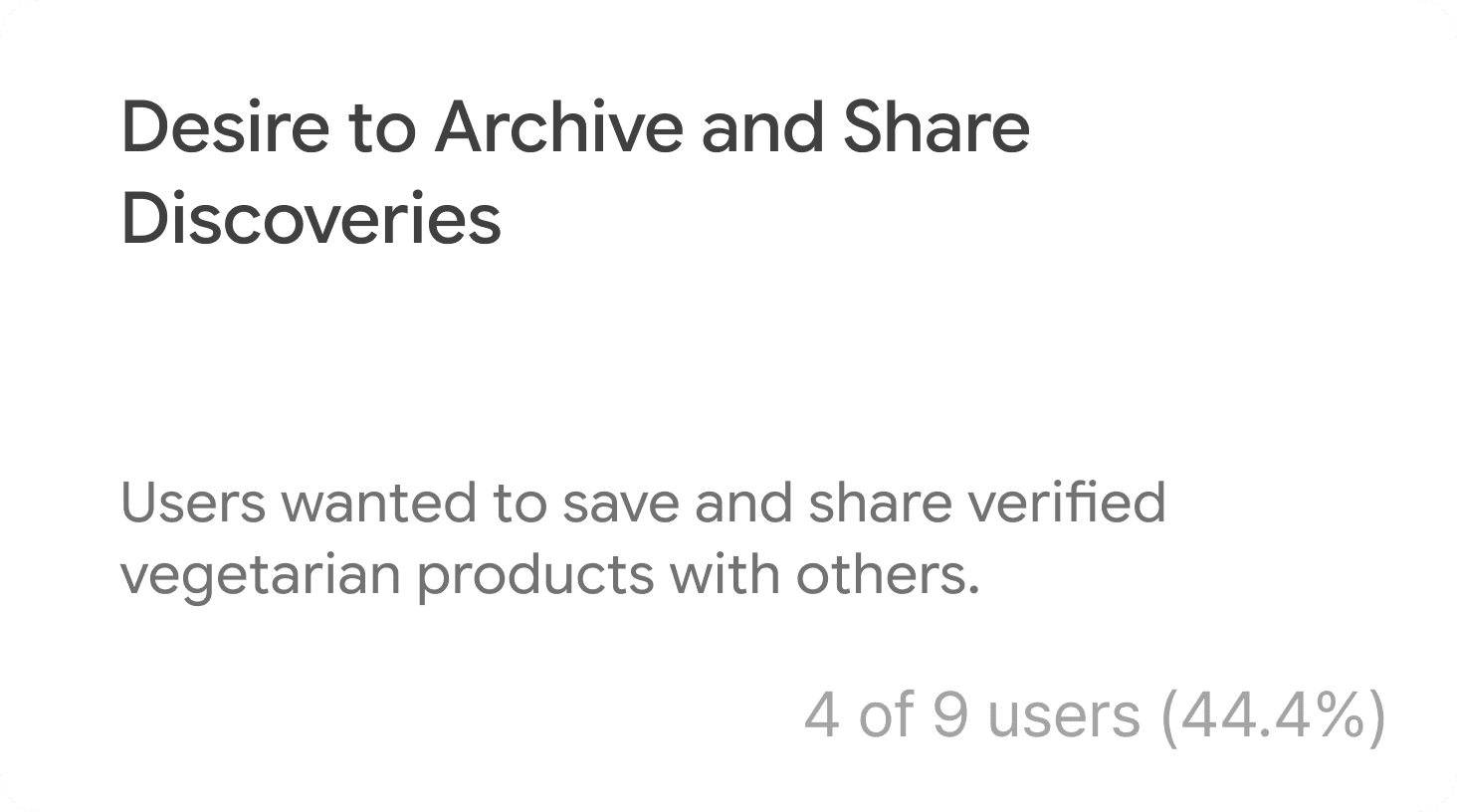
Identify areas for improvement


1. Redesign the camera scanning
“
I wish it could scan automatically without taking a photo.
— from post-use in-depth interviews
Scanning Interface Benchmarking



Common Pattern
All tools minimize user effort by automatically detecting and scanning text without requiring manual capture.
Design Implication
Vday should eliminate manual capture and trigger scanning automatically when the ingredient label is detected.
What Changed
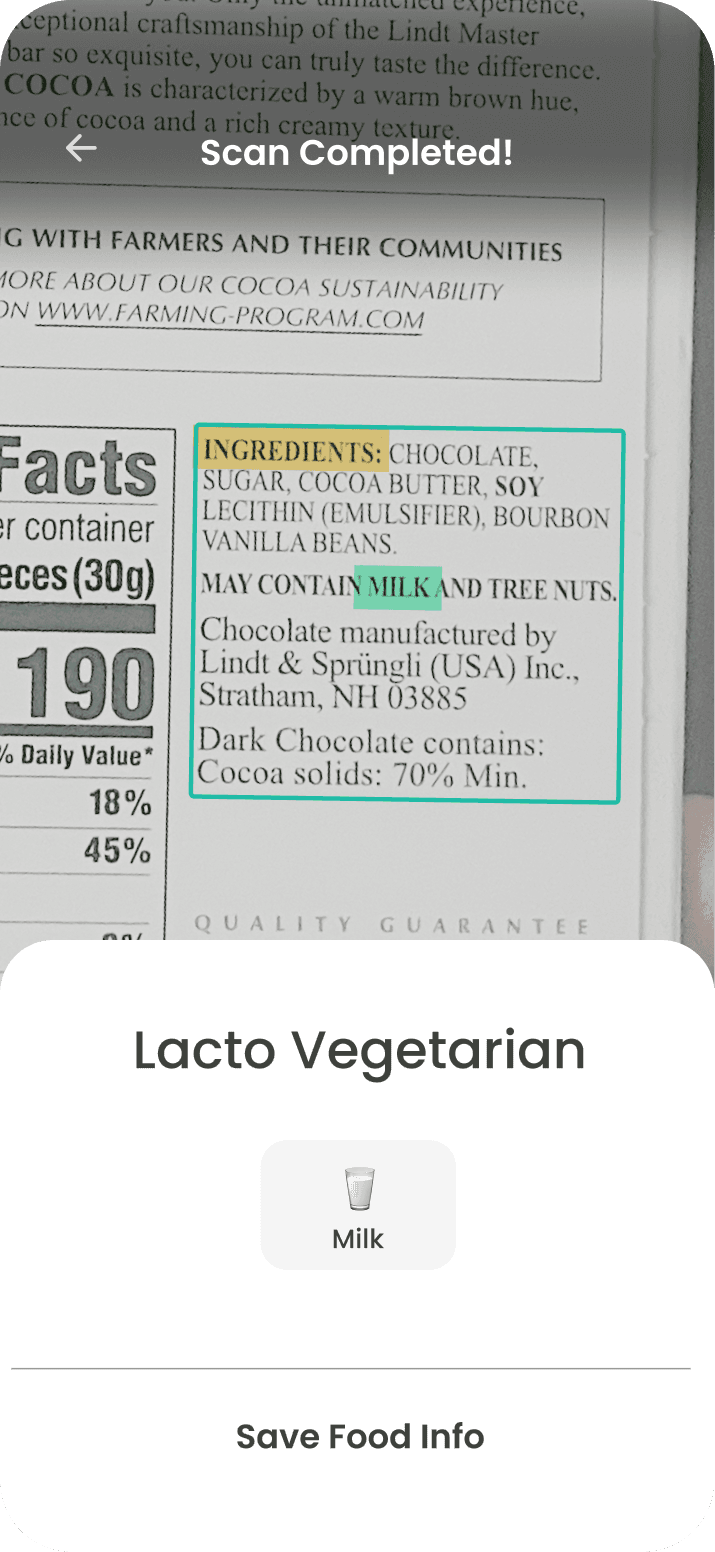
This redesign reduced user interaction from four steps to one, eliminated manual capture friction, and enabled real-time ingredient awareness.
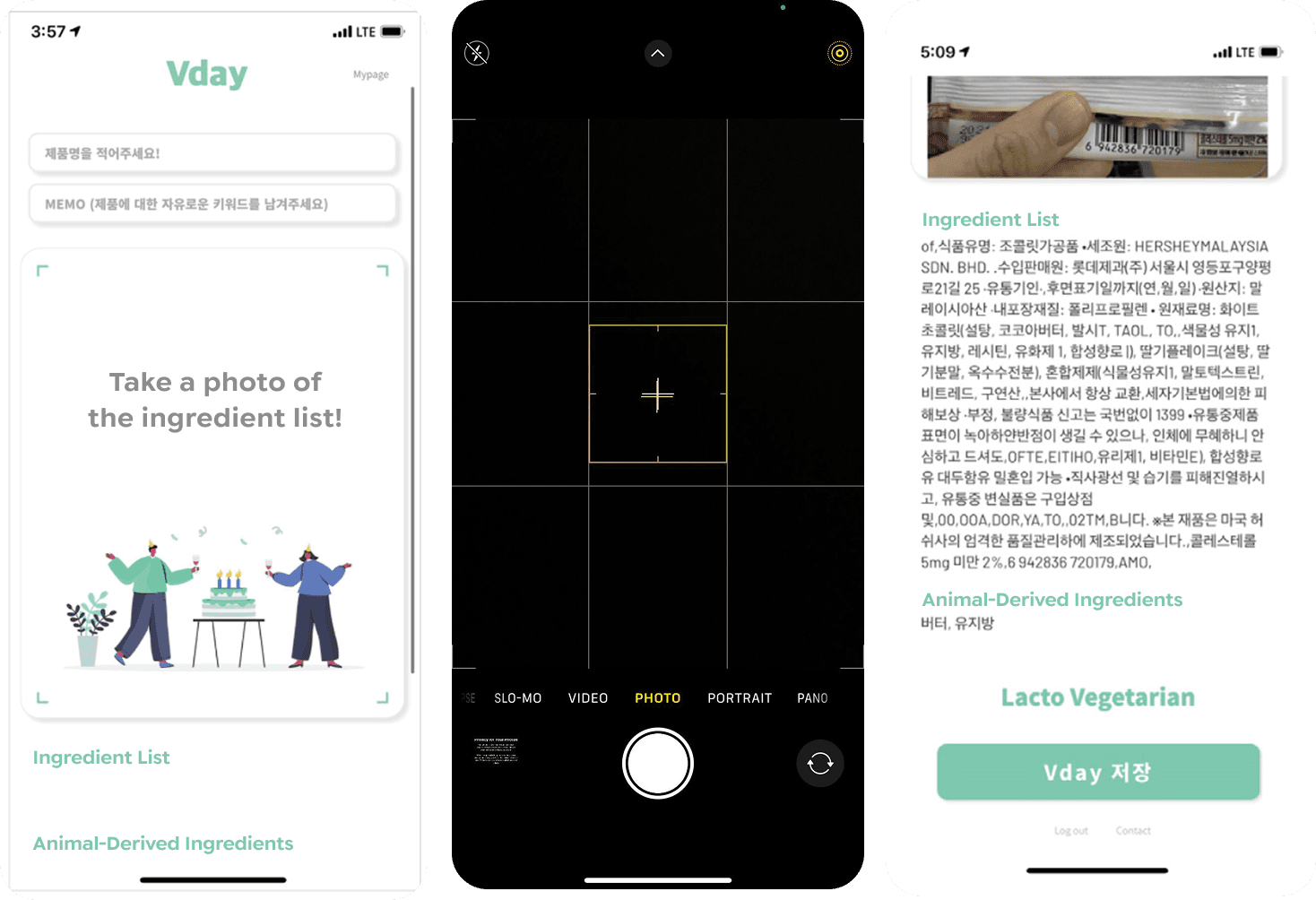
AS IS
Manual capture → OCR → Highlight
Users had to capture, wait, and review.
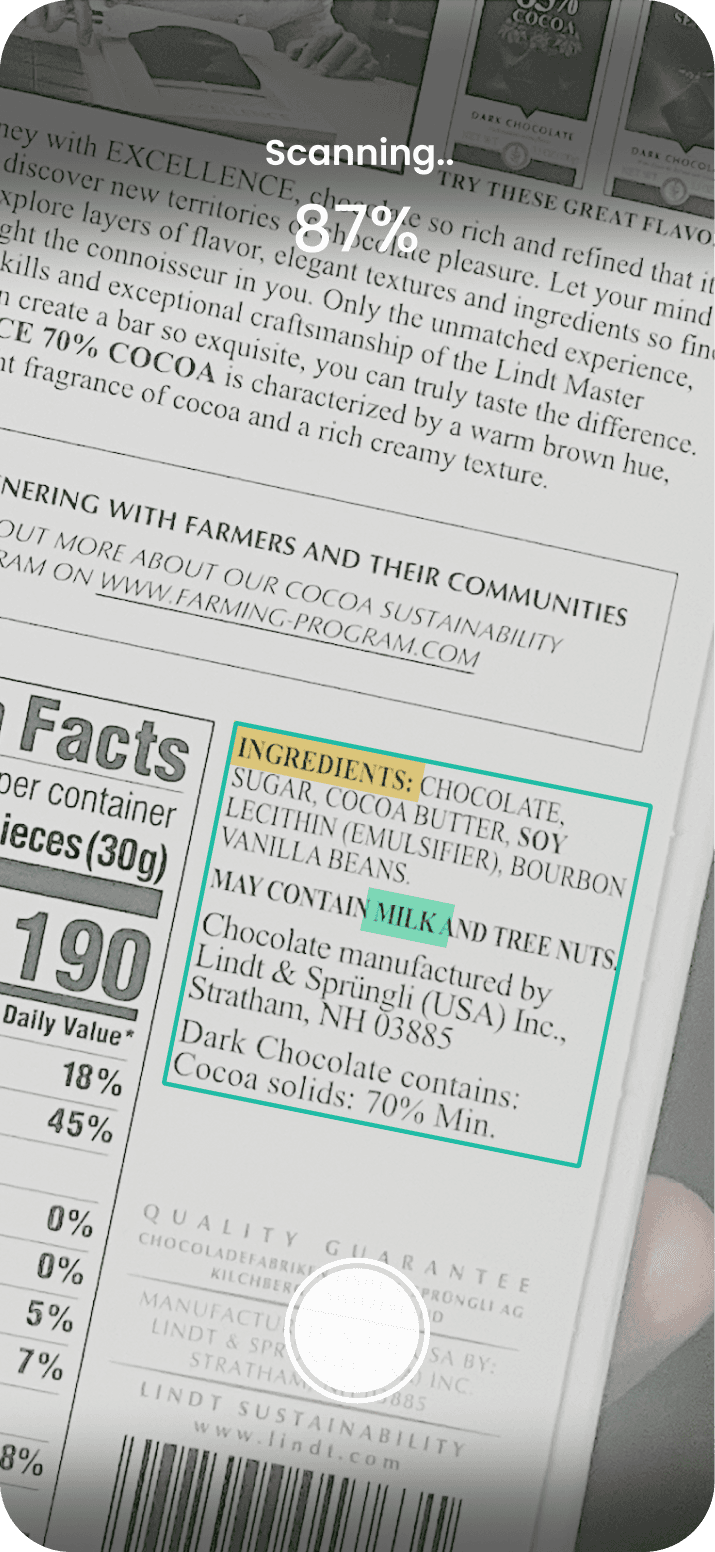
TO BE
Live detection → Auto highlight
No manual capture. Instant ingredient awareness.
2. Ingredient transparency (Vegan Wiki)
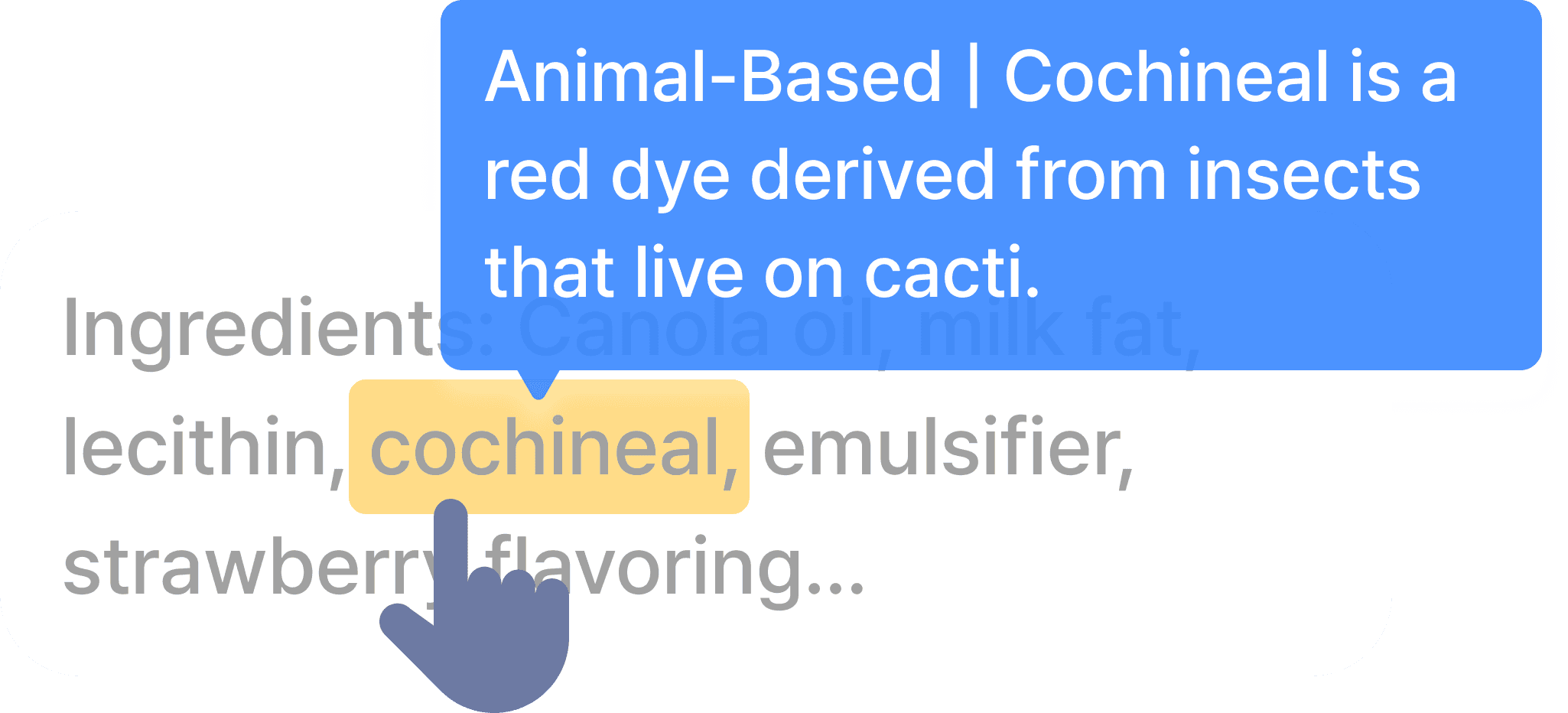
Unfamiliar or ambiguous ingredients (e.g., cochineal) prevent confident decisions, leading users to avoid new products without instant, trusted explanations (7 of 9 users).
Design Implication
Provide tap-to-explain ingredient definitions with clear animal-based indicators to support confident choices.
3. Community features (Based on saved food)
Users want to explore and reuse other vegetarians’ saved food records to discover new options (4 of 9 users).
Design Implication
Enable sharing and browsing of saved food information by vegetarian type.


Identify areas for improvement
Identify areas for improvement
1. Scanning Interface Benchmarking
“
I wish it could scan automatically without taking a photo.
I wish it could scan automatically without taking a photo.
— from post-use in-depth interviews
Common Pattern Observed
Common Pattern Observed
All tools minimize user effort by automatically detecting and scanning text without requiring manual capture.
All tools minimize user effort by automatically detecting and scanning text without requiring manual capture.
Design Implication
Design Implication
Vday should eliminate manual capture and trigger scanning automatically when the ingredient label is detected.
Vday should eliminate manual capture and trigger scanning automatically when the ingredient label is detected.
What Changed
What Changed
This redesign reduced user interaction from four steps to one, eliminated manual capture friction, and enabled real-time ingredient awareness.
This redesign reduced user interaction from four steps to one, eliminated manual capture friction, and enabled real-time ingredient awareness.
AS IS
Manual capture → OCR → Highlight
Users had to capture, wait, and review.
AS IS
Manual capture → OCR → Highlight
Users had to capture, wait, and review.
TO BE
Live detection → Auto highlight
No manual capture. Instant ingredient awareness.
TO BE
Live detection → Auto highlight
No manual capture. Instant ingredient awareness.
2. Ingredient transparency (Vegan Wiki)
Unfamiliar or ambiguous ingredients (e.g., cochineal) prevent confident decisions, leading users to avoid new products without instant, trusted explanations (7 of 9 users).
Design Implication
Design Implication
Provide tap-to-explain ingredient definitions with clear animal-based indicators to support confident choices.
Provide tap-to-explain ingredient definitions with clear animal-based indicators to support confident choices.
3. Community features (Based on saved food)
Users want to explore and reuse other vegetarians’ saved food records to discover new options (4 of 9 users).
Users want to explore and reuse other vegetarians’ saved food records to discover new options (4 of 9 users).
Design Implication
Design Implication
Enable sharing and browsing of saved food information by vegetarian type.
Enable sharing and browsing of saved food information by vegetarian type.
More Featured Work


Quotes from Journal Reviewers
Quotes from Journal Reviewers
Quotes from Journal Reviewers
Reviewer B
Reviewer B
This research provides a well-articulated exploration of how vegetarians navigate food choices during grocery shopping, highlighting their decision- processes and motivations.
This research provides a well-articulated exploration of how vegetarians navigate food choices during grocery shopping, highlighting their decision- processes and motivations.
Reviewer A
Reviewer A
This study presents a creative and valuable contribution with strong real-world applicability, extending beyond vegetarians to individuals with dietary restrictions such as allergies or religious beliefs.
This study presents a creative and valuable contribution with strong real-world applicability, extending beyond vegetarians to individuals with dietary restrictions such as allergies or religious beliefs.
English translation of the full paper can be found here (link)
English translation of the full paper can be found here (link)
More Featured Work



DURATION
6 Months
ROLE
First Author and Principal Designer
CONTRIBUTION
UX Research: Information Architecture, Video Ethnography, Contextual Inquiry, In-depth interview, Thematic Coding
UI Design, Rapid Prototyping
Document Journal Paper
Prototyping and Web Deployment
End-to-End Design